My Research

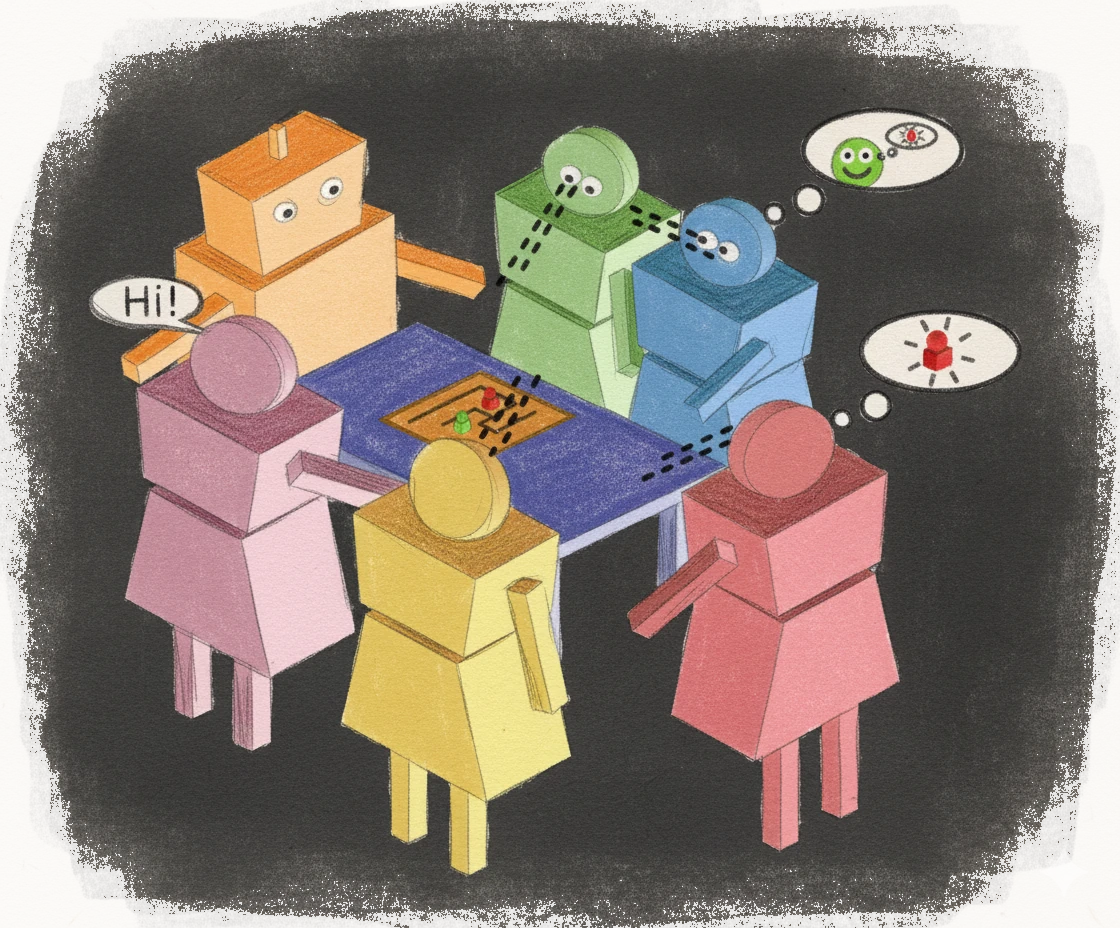
I focus my research on Artificial Cognition for Socially Intelligent Robots. My work addresses several fundamental questions like:

  • How can robots build sophisticated mental models and maintain socio-physical situation awareness of their human partners?

  • What socio-cognitive architectures favor the long-term, responsible acceptance of robots in human environments?

By bridging cognitive psychology with robotics and artificial intelligence, I explore the psychological determinants (such as Theory of Mind) that influence our relationships with embodied AI.
back to top

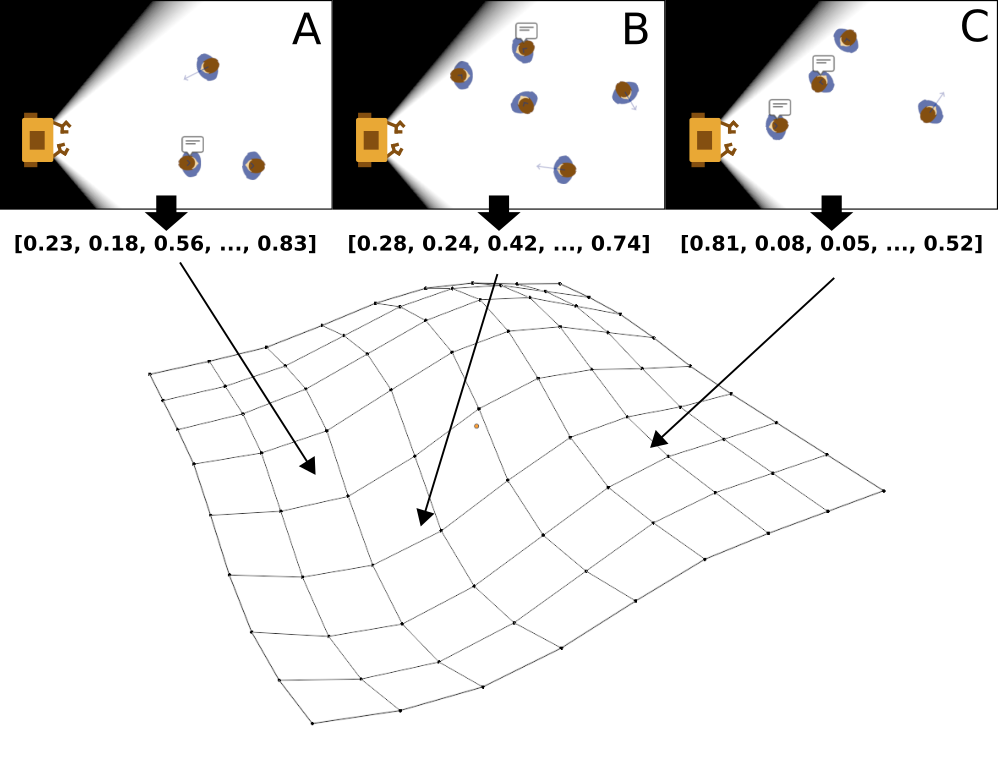
My recent work explores how robots can understand and represent social situations. I introduced the concept of Social Embeddings: compact, semantics-preserving representations of social situations that leverage large language models to encode the dynamics of human interactions into vector spaces. This enables robots to quantitatively compare and recognise the social scenarios they encounter. I also investigate context-aware affect recognition using sentence embeddings to distinguish socially appropriate from inappropriate interactions, and multi-modal affect detection combining thermal imaging with facial action units for non-intrusive emotion recognition.

back to top

I validate my research through extensive real-world deployments, including lifelong co-design with users in public spaces like schools and hospitals.

I have shown how social robots can support autistic children through a three-week school deployment co-designed with children and teachers, or help children struggling with handwriting. My work on socially assistive robots in geriatric care (notably the EU SPRING project deploying an ARI robot at a Paris hospital) demonstrates how LLM-enhanced dialogue significantly improves patient acceptability and engagement. I have also explored participatory co-design and end-to-end participatory design methodologies to ensure robots are shaped by the people who use them.

back to top

A core pillar of my work is the creation of open-source software standards and tools. I am the lead architect and maintainer of ROS4HRI (ROS REP-155), the first international software standard for Human-Robot Interaction, now adopted by major research projects across Europe. Building on ROS4HRI, I have developed with Lorenzo Ferrini novel spatially-grounded semantic representations (reMap), multi-modal saliency maps for robot attention, and the Mr. Potato algorithm for probabilistic fusion of detected social features into coherent person models.

back to top

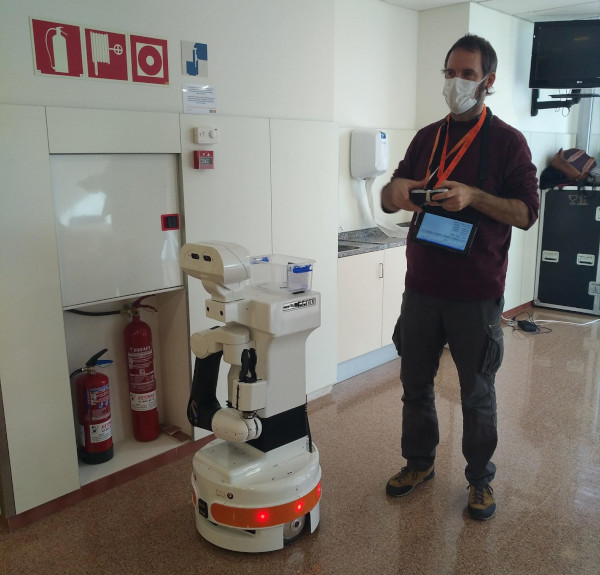
Science should have an impact on society: From 2021 to 2025, I led Technology Transfer at PAL Robotics as the Head of the AI and Social Robotics group, bridging academic research and industry. My research underpins the backbone architecture of commercial robots used globally in healthcare, education, and research -- including the new TIAGo Pro social robot integrating ROS4HRI, local LLMs, and knowledge-based reasoning. I am also deeply committed to responsible robotics: I co-authored the Roadmap for Responsible Robotics and lead critical examinations of the societal implications of humanoid robots, including issues of trust, accountability, and sustainability.

back to top